

Why Your Online Star Rating Directly Impacts Customer Trust

Updated: Mar 22
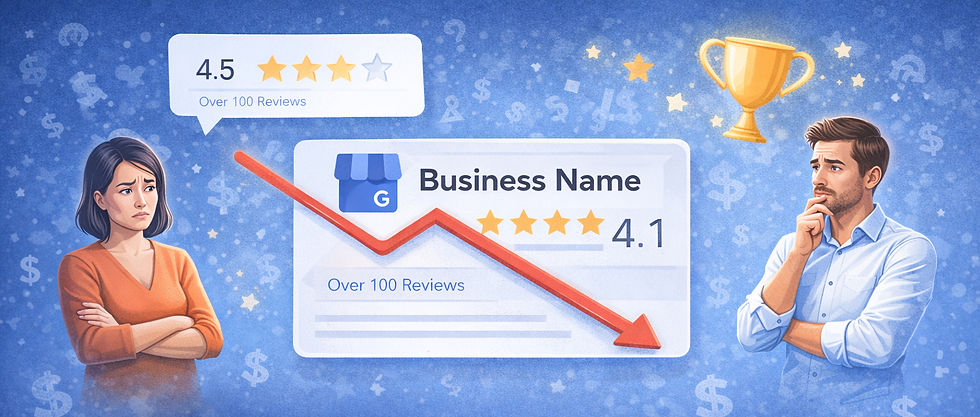
Online reviews have become a key factor in how customers decide which businesses to trust. Before making a purchase or booking a service, most people glance at the average star rating on platforms like Google, Yelp, or TripAdvisor. This quick check often determines whether they continue exploring or move on to a competitor.
Research shows that when a business’s rating falls below about 4.2 stars, potential customers start to hesitate. Even a small drop in rating can create doubt about the quality or reliability of the business. This subtle shift in perception can lead to lost sales and fewer repeat customers.
Understanding why this 4.2-star threshold matters can help businesses protect their reputation and keep customers loyal.
Why Star Ratings Influence Customer Decisions
Star ratings serve as a fast, visual signal of trustworthiness. Most customers do not read every review. Instead, they rely on the overall rating to decide if a business is worth their time.
Ratings above 4.5 stars suggest excellent service and high customer satisfaction.
Ratings between 4.2 and 4.5 stars are seen as solid and dependable.
Ratings below 4.2 stars raise questions about quality and reliability.
In competitive markets, customers often pick the business with the highest rating. When several options offer similar products or services, even a small difference in stars can tip the scales.
For example, a local café with a 4.3-star rating will likely attract more customers than one rated 4.0 stars, even if both have mostly positive reviews. The lower rating creates a subtle doubt that pushes customers to look elsewhere.
The Psychological Threshold of 4.2 Stars
The 4.2-star mark acts as a psychological boundary for many consumers. It represents a point where trust begins to weaken.
Businesses rated below this level often face:
Fewer clicks on their online listings
Reduced trust from potential customers
More intense comparison with competitors
This threshold exists because customers expect a certain level of consistency and quality. When ratings dip below 4.2, it signals that some customers had negative experiences. Even if those experiences are few, they weigh heavily on perception.
Consider a hotel with a 4.1-star rating. Potential guests may wonder if the negative reviews point to issues like poor service or cleanliness. This doubt can lead them to choose a competitor with a slightly higher rating, even if the difference is small.
How Businesses Can Protect Their Ratings
Maintaining a rating above 4.2 requires ongoing effort. Here are practical steps businesses can take:
Encourage satisfied customers to leave reviews. Positive reviews help balance out occasional negative feedback.
Respond promptly and professionally to negative reviews. Showing that you care about customer concerns can improve public perception.
Focus on consistent quality. Delivering reliable products and services reduces the chance of bad reviews.
Monitor reviews regularly. Early detection of issues allows quick action before ratings drop.
For example, a restaurant that actively asks happy diners to share their experience online can maintain a strong rating. When a complaint arises, a quick, polite response can turn a negative impression into a positive one.
The Impact of Ratings on Customer Retention
A rating below 4.2 not only affects new customer acquisition but also impacts existing customers. Loyal customers may start doubting their choice if they see the rating slipping. This can lead to reduced repeat business and lower lifetime value.
On the other hand, businesses with ratings above 4.2 enjoy:
Higher customer confidence
Increased word-of-mouth referrals
Better online visibility
These benefits create a positive cycle that supports growth and long-term success.
Final Thoughts on the Importance of a 4.2 Star Rating
The difference between a 4.1 and 4.3-star rating may seem small, but it carries significant weight in customer decision-making. Businesses that keep their ratings above 4.2 build stronger trust and attract more customers.


Comments